


The Panorama Route introduces another landscape to a Kruger and Lowveld journey. Its escarpment, canyon views and waterfalls belong to a regional chapter outside Kruger National Park. Make that distinction explicit when comparing an itinerary or deciding how much to include.
Start with the broad setting
South African Tourism’s Panorama Route overview connects the escarpment with Blyde River Canyon and named viewpoints. Use it for orientation, while taking current operating details from the places or providers responsible for your actual visit.

Full Day Kruger Safari including Entrance Fees
Embark on an unforgettable Kruger National Park Day Tour with Wild Planet Safari. Experience the breathtaking landscapes and diverse wildlife, includi...

Amazing Full Day Kruger National Park Big 5 Safari
Experience the wild beauty of Africa on a full day Kruger National Park safari. With guaranteed entry you avoid long...

Exclusive Morning Game Drive Safari near Hoedspruit
What a way to start a day in Africa? Watching the sunrise from the comfort of an open safari vehicle, nestled among...

Full-Day Shared Kruger National Park Safari from Hoedspruit
Our highly qualified guide will collect and drop you off from any hotel or address in Hoedspruit, our guides take pr...
A route name does not mean that every stop uses the same entrance, access arrangement or opening pattern. Read the named places in an offer, rather than assuming that “Panorama Route” describes an identical outing each time it appears.
Give the canyon its own scale
Reading the canyon starts with the relationship between steep ridges and the water below. Different viewpoints bring one part forward while others recede. Let the larger shape of the landscape establish the scale before concentrating on an individual feature.
Let the view establish the scale before seeking a particular image. Visibility and weather belong to the day. A photograph does not confirm current access to the place from which it was taken, and a familiar composition is not a reason to leave a marked visitor area.
Keep waterfall names and locations clear
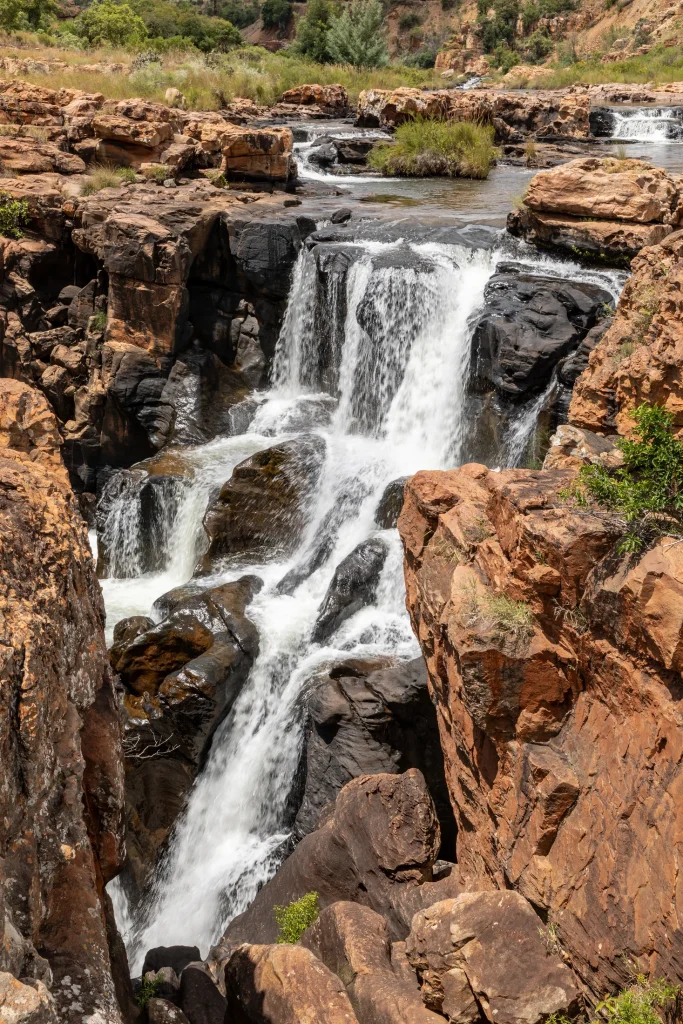
The waterfall photograph below shows the Treur River at Bourke’s Luck Potholes in the Blyde River Canyon Nature Reserve. It was made in February 2024. It is a regional scene, not a waterfall inside Kruger National Park, and it is not labelled as a different Panorama Route waterfall.
%2C_Blyde_River%2C_Bourke%27s_Luck_Potholes_--_2024_--_0015.jpg)
When an itinerary includes waterfalls or viewpoints, ask which ones are intended and what the visit involves. If walking surfaces, steps or access arrangements affect your decision, describe the specific need to the responsible provider. A general adjective such as “easy” is not a complete answer.
Choose a coherent regional outing
A short list of priorities can be more useful than a long inventory of places. Decide whether your main interest is the canyon landscape, named viewpoints or another particular stop. Then read the proposed sequence alongside your arrival and onward commitments.
- List the exact stops that matter to you.
- Confirm who supplies transport and where the outing begins.
- Read the inclusions, access description and change terms.
- Leave room for current conditions and the time you want to spend looking.

Panorama Guided Experience
Explore a beautiful scenery drive, we provide mind blowing experience, we touch base on very interesting topics such as Topography, Geology, History...

Kruger National Park - Private full day Safari trip.
Our safari trips are private and exclusive. You do not share the Safari vehicle with any other guest, just your own...

Kruger National Park Afternoon Private safari
The Kruger national park is a leading African wilderness, not only does it offer the Big 5 but cheetah and Wild Dogs...

Kruger Safari Tour - Full Day
We offer you daily Safaris onto The Kruger National Park in a luxury and comfortable Open Safari Vehicle with a qual...
If you are combining the escarpment with a park visit, plan the two settings as separate parts of the journey. A gateway base may help connect them, but the practical fit depends on the actual property, route and arrangements you choose.